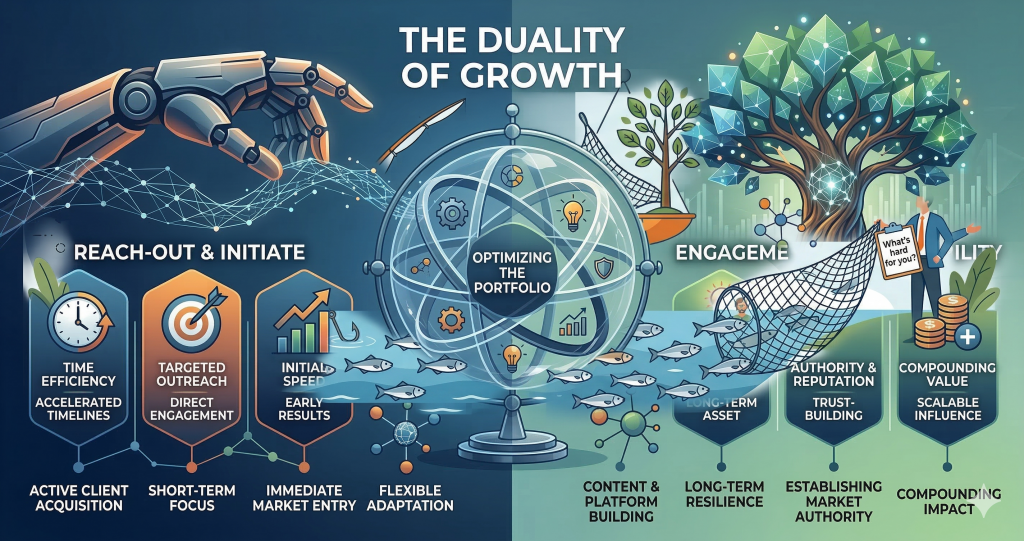
There’s a massive difference between someone who asks “what do you do?” and someone who asks “what’s hard for you in your business?”
The first question leads to a surface-level answer. The second opens a real conversation.
In a webinar I ran this week, I spoke with Roi, who builds automations for businesses. He shared that he struggles to find clients — people don’t understand what automation is, why they need it, or how it would help them.
I told him: “Stop offering automation. Start asking about the pain.”
I demonstrated live how it works:
“Tell me — what’s the one thing you hate most about your business?”
“Ah… marketing.”
“Why do you hate marketing?”
“Because I have to write posts from scratch every time, and I just don’t have the energy.”
“What would actually help you with that?”
See what happened there? I didn’t pitch automation. I asked about the pain. And he told me exactly what was bothering him.
Only then — after I’d listened — could I say: “You know, what you’re describing sounds like something I can help with. I build automations that can generate content for you automatically, based on the topics that matter to you. Want to see an example?”
That’s the difference between a salesperson and someone who genuinely helps.
A salesperson says: “I have a product — buy it.”
Someone who helps asks: “What’s hard for you? Let’s figure it out together.”
The questions that open doors: — “What’s the one thing you hate most about your business?” — “What’s the one thing that, if someone took it off your plate, you’d say thank god?” — “What do you do every month that eats your time and makes you think — not this again?”
These aren’t marketing questions. They’re real questions. And people answer them — because they want to talk about what’s hard.
After you hear the answer — don’t jump straight to a solution. Ask more questions. Go deeper. Let the person feel genuinely heard. And only then, if you truly have something that can help — offer it.
Even then, offer an experience, not a sale: “Want to try this together? No commitment — just to see if it works for you.”
The best sales I’ve ever made weren’t sales at all. They were conversations. Where I really listened. Really understood what was hard. And really could help.
What question do you ask when you meet a potential client?